How Much Protein Do I Need Per Day? Turning Your Target Into Scoops
Most people who train do well on 1.2 to 2.0 g of protein per kilogram a day. Here's how to find your number, count what food already gives you, and work out how many scoops (and how long a bag) that really means.

How much protein do I need per day? If you train regularly, aim for 1.2 to 2.0 g per kilogram of body weight, which works out to about 90 to 150 g for a 75 kg adult. Most of that should come from food. A scoop of protein powder (24 to 27 g in the Vanilla powders below) is simply a cheap, quick way to fill whatever gap is left. Below: a table to find your number, how to read a label, and a worked example that turns the gap into scoops and shows how long a bag lasts.
How much protein do I need per day? 1.2 to 2.0 g per kilogram if you train
The joint position of Dietitians of Canada, the Academy of Nutrition and Dietetics and the American College of Sports Medicine puts athletes at 1.2 to 2.0 g of protein per kilogram of body weight a day. The International Society of Sports Nutrition (ISSN) lands in the same place: 1.4 to 2.0 g/kg a day is enough for most people who exercise, spread across meals.
Is that much safe? For healthy, active people, the ISSN's earlier position stand concluded that 1.4 to 2.0 g/kg a day is safe and may help training adaptations. For comparison, the general recommendation for adults who don't train is 0.8 g/kg.
Find your number: body weight times your training level
Pick the row closest to your weight, then the column that matches how you train:
- 1.2 g/kg: you train two or three times a week, or you're getting back into it.
- 1.6 g/kg: you lift or play a sport three to five times a week and want to build or keep muscle. A sensible default.
- 2.0 g/kg: you train hard most days, you're in a heavy season, or you're eating less to lose fat and want to hold on to muscle.
| Body weight | 1.2 g/kg | 1.6 g/kg | 2.0 g/kg |
|---|---|---|---|
| 60 kg (132 lb) | 72 g | 96 g | 120 g |
| 75 kg (165 lb) | 90 g | 120 g | 150 g |
| 90 kg (198 lb) | 108 g | 144 g | 180 g |
Otherwise, multiply your weight in kilograms (pounds ÷ 2.2) by your number.
Count what food already gives you before you reach for a scoop
Most people eat more protein than they think. Log one normal day using the labels in your fridge, or these rough figures:
- Two large eggs: about 12 g
- 175 g (3/4 cup) plain Greek yogurt: about 15 to 18 g
- 250 ml (1 cup) milk: about 8 g
- 100 g cooked chicken breast (about the size of your palm): about 30 g
- 175 ml (3/4 cup) cooked lentils: about 13 g
If you're already at your target, you don't need powder. If you're 20 to 50 g short, one or two scoops close the gap. The ISSN suggests 20 to 40 g per meal every three to four hours, so a shake works best where a meal runs light, like breakfast or after an evening session.
Weight in kg × 1.2, 1.6 or 2.0.
Log one ordinary day of eating and add up the grams of protein.
Divide what's missing by the protein in one scoop of your powder.
How to read a protein label: serving size, grams per serving and servings per bag
Three numbers on the label tell you everything you need:
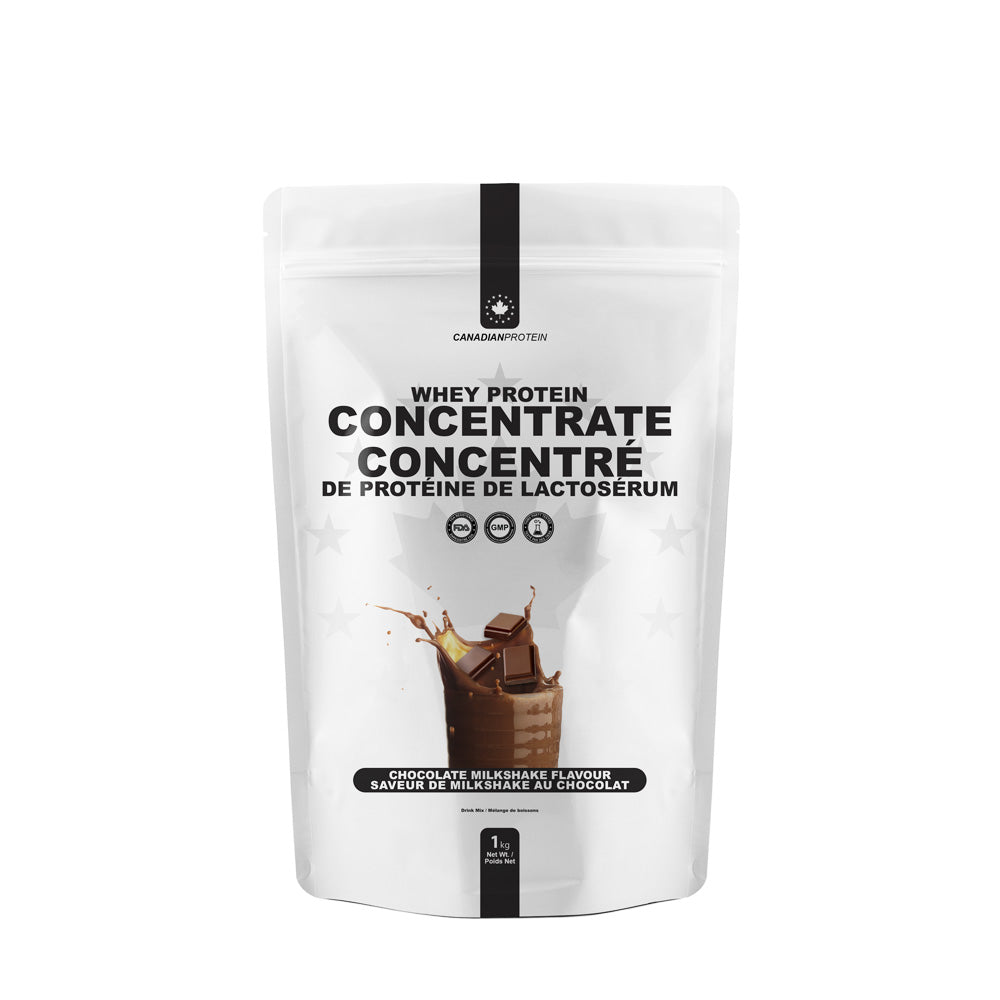
The weight of one scoop in grams. It changes by flavour because cocoa and flavourings add weight: our Whey Protein Concentrate is 31 g in Vanilla, 30 g in Unflavoured & Unsweetened and 33 g in Chocolate Milkshake.
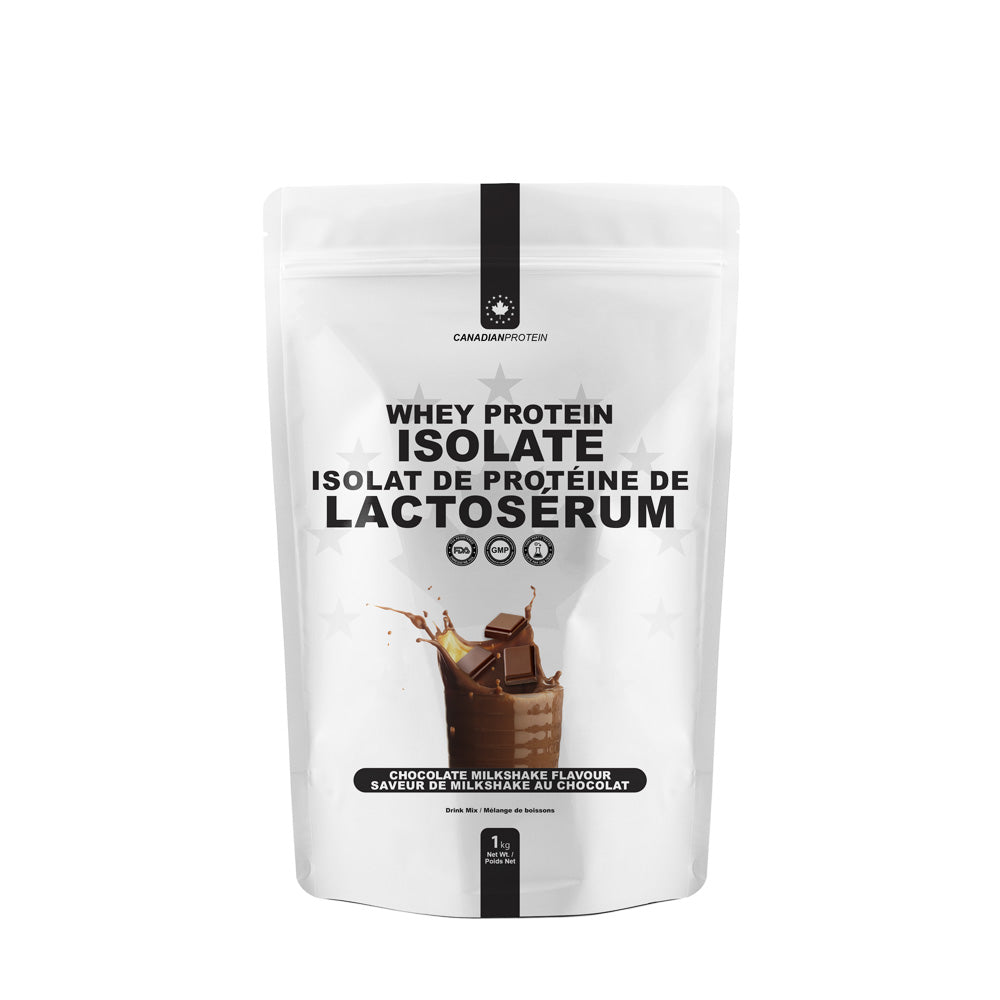
The number you put into your maths. Vanilla Whey Protein Concentrate has 24 g in 31 g. Vanilla Whey Protein Isolate has 27 g in 31 g, with 121 kcal against 127 kcal. Vanilla Vegan Protein (pea, brown rice and hemp protein isolates, sweetened with stevia) has 24 g in 32 g.
Bag weight divided by serving size, so it's always "about". A 1 kg bag of Vanilla concentrate gives about 32 servings, while Chocolate Milkshake gives about 30.
One quick check: divide protein by serving size to see how much of each scoop is protein. Vanilla concentrate is about 77% (24 of 31 g), while Vanilla isolate is about 87% (27 of 31 g). Lost the scoop or bought a bulk bag? Use a kitchen scale and the serving size in grams. Our guide to measuring protein powder without a scoop walks you through it.
Turning the gap into scoops: a worked example
Sam weighs 75 kg and lifts four days a week, so Sam's target is 75 × 1.6 = 120 g a day.
- Breakfast: two eggs and toast, about 17 g
- Lunch: chicken wrap, about 30 g
- Snack: Greek yogurt, about 16 g
- Dinner: salmon, rice and vegetables, about 32 g
That's about 95 g from food, so Sam is 25 g short. One 31 g scoop of Vanilla Whey Protein Concentrate (24 g) or Whey Protein Isolate (27 g) covers it. On busy days when lunch is a salad, the gap grows to about 50 g, and two scoops do the job.
Gap in grams ÷ protein per scoop = scoops a day. Round to the nearest whole scoop; being a few grams over or under won't matter over a week.
How long a bag lasts, and what that means for price per serving
Divide servings per bag by scoops per day. Here's how the Vanilla options compare at our regular prices:
| Product (Vanilla) | Servings | Price | Per serving | At 1 scoop a day | At 2 scoops a day |
|---|---|---|---|---|---|
| Whey Protein Concentrate, 1 kg | about 32 | $69.99 | $2.19 | about 32 days | about 16 days |
| Whey Protein Isolate, 1 kg | about 32 | $79.99 | $2.50 | about 32 days | about 16 days |
| Whey Protein Isolate, 2 kg | about 64 | $149.99 | $2.34 | about 64 days | about 32 days |
| Vegan Protein, 1 kg | about 31 | $59.99 | $1.94 | about 31 days | about 15 days |
| Vegan Protein, 2 kg | about 62 | $109.99 | $1.77 | about 62 days | about 31 days |
| Bulk Whey Protein Concentrate, 6 kg | about 193 | $311.98 | $1.62 | about 6 months | about 3 months |
| Bulk Whey Protein Concentrate, 10 kg | about 312 | $487.46 | $1.56 | about 10 months | about 5 months |
The pattern is simple: bigger bags cost less per scoop, and a subscription brings the price down again. On a subscription, a 1 kg bag of Vanilla concentrate is $48.99 instead of $69.99, which brings it to about $1.53 a serving.
Among the whey options here, the lowest price per serving is Bulk Whey Protein Concentrate in Vanilla, 10 kg, on subscription: $463.09, or about $1.48 a serving (24 g of protein in a 32 g scoop on the 10 kg bag). It makes the most sense if you take two scoops a day or a whole household shares one flavour; if you take one scoop a day and want a smaller bag, the 1 kg subscription comes within a few cents a serving.
If plant protein suits you, Vegan Protein costs less again on a subscription, with the same 24 g of protein a scoop: the 1 kg Vanilla is $41.99 (about $1.35 a serving) and the 2 kg Vanilla is $76.99 (about $1.24 a serving), the lowest price per serving of anything in this table.
Who doesn't need protein powder at all
Plenty of people. If your food log already reaches your target, a scoop adds cost and nothing else. The same goes if you train lightly and you're comfortably above 0.8 to 1.2 g/kg from meals. Powder is a convenience: 24 g from a shake does the same job as 24 g from chicken or lentils.
If you've been told to watch your protein for a health reason, or you take medication, ask your doctor or pharmacist before raising your intake.
FAQ: protein per day, per meal and per scoop
How much protein can my body use in one meal?
There's no hard cap, but the ISSN suggests 20 to 40 g per meal, or about 0.25 g per kilogram, spread every three to four hours. Splitting 120 g into four meals of about 30 g is a practical way to do that.
Is one scoop of protein powder enough?
That depends on how big your gap is. One scoop of our Vanilla powders gives 24 to 27 g, which covers most people who eat reasonably well. If you're 40 g or more short, two scoops or a bigger meal will get you there.
Can I eat too much protein?
For healthy, active adults, the ISSN's 2007 position stand found 1.4 to 2.0 g/kg a day to be safe. Going far past your target mostly costs money. If you have a health condition, ask your doctor first.
Do I need more protein after 40?
The ISSN's 2017 position stand notes that older adults may need closer to 40 g of protein per meal to get the full muscle-building response, against 20 to 40 g for younger people. That evidence comes from studies in elderly people (one tested men with an average age of 71), not people in their 40s or 50s, so we don't know that the same applies at 45. In midlife, the 1.2 to 2.0 g/kg range above, spread over meals of 20 to 40 g, is a sensible target. If you're also weighing supplements, see our guide to creatine after 40.
Pick a target, fill the gap, buy the size that fits
Multiply your weight by 1.2 to 2.0, count what you eat in a normal day, and divide what's missing by the protein in your scoop. Then pick the bag that matches your pace: 1 kg to try a flavour, a subscription or bulk size once you know you'll use it every day. Vanilla Whey Protein Concentrate is a straightforward place to start: 24 g of protein a scoop for $2.19, made in Windsor, Ontario.
Explore Whey Protein ConcentrateReferences & further reading
Disclaimer: This article is general information for healthy adults, not medical advice. If you have a health condition or take medication, talk to your doctor, pharmacist or a registered dietitian before changing your diet or adding supplements.