If you lift and you're somewhere past 40, you've probably seen the headlines this fall: a new Texas A&M study gave creatine to adults aged 45 to 65 and reported better results for lean mass and strength. Creatine is already one of the most researched supplements in sport, so it's fair to ask what this study actually adds, and what it means for your training. Here's the short version, plus a simple way to take creatine day to day.
What the Texas A&M study tested
The trial came out of Dr. Richard Kreider's Exercise and Sport Nutrition Lab at Texas A&M and was announced by the university in September 2026. Here's what was set up, as reported:
- Who: 64 adults aged 45 to 65 who weren't training before the study.
- How long: 12 weeks.
- What they took: creatine monohydrate, 5 g twice a day (10 g a day in total), or a placebo.
- The two groups: one group followed a structured exercise program with a modest calorie deficit. The other group didn't exercise.
Within each group, who got creatine and who got placebo was assigned at random. That's the part that lets researchers compare creatine against placebo fairly.
What it found for strength and lean mass
According to the study coverage, the people taking creatine did better on lean tissue and strength than the people on placebo. The bigger story for lifters is that the strength gains were largest when creatine was combined with training. Nutritional Outlook summed it up the same way: the benefits creatine is known for in younger athletes seem to carry over to middle-aged and older adults.
If you want the exact numbers for each group, read the paper itself in the Journal of the International Society of Sports Nutrition. Headlines round things off, and small differences can sound bigger than they are.
Why training made the difference
Creatine doesn't build muscle by itself. It tops up the creatine stored in your muscles, and your muscles use it for short, hard efforts like a heavy set of squats or the last few reps of a press. More stored creatine can mean an extra rep here and a slightly heavier set there.
Over weeks and months those extra reps add up to more training. More training, done well and progressed over time, is what makes you stronger. That's why the combination worked best in this study. Creatine helps you do more of the work, but the lifting is still what drives the results.
Reading the headlines carefully
This is a useful study, but a few things are worth keeping in mind before you take every headline at face value:
- It's small. 64 people split across four groups means each group was fairly small.
- It's short. Twelve weeks tells us about the early stretch, not what happens after years of training.
- People chose their own group. Participants picked whether they'd be in the exercise group or the non-exercise group. Only creatine vs placebo was randomized. People who choose to exercise may differ in other ways too.
- "Without exercise" oversells it. Some coverage suggests creatine works whether you train or not. The clearer takeaway is that creatine plus training did best. If strength is your goal, keep the training.
How to use creatine monohydrate after 40
Good news: none of this is complicated. Creatine monohydrate is the form used in this study and in most creatine research, and taking it comes down to a few habits.
Take it every day
Creatine works by keeping your muscle stores full, so what matters is taking it consistently. The International Society of Sports Nutrition's position stand on creatine describes about 3 to 5 g a day as a typical maintenance dose. The Texas A&M study used 10 g a day, split into two doses. Always follow the directions on your product's label.
Loading is optional
A loading phase (a higher dose for about a week) fills your muscles faster. Skip it and a daily dose gets you to the same place in a few weeks. If you don't want to rush, there's no need to load.
Timing matters less than consistency
Before or after training, with breakfast or with dinner: pick whatever time you'll actually remember. Plenty of lifters add it to their post-workout shake.
Don't skip rest days
Take your creatine on rest days too. It keeps your stores topped up for the next session.
Mix it simply
Unflavoured creatine stirs into water, juice or a protein shake. A Shaker Bottle makes it quick, and adding it to a Whey Protein Isolate shake covers your creatine and some of your protein in one go.
If you have a medical condition or take medication, talk to your doctor before you add any supplement.
Pairing creatine with a strength plan for lifters 40+
Creatine works best on top of a solid plan. For most lifters in their 40s, 50s and 60s, that looks like this:
- Progressive overload: add a little weight, a rep or a set over time. Small, steady jumps beat big ones.
- Two to four sessions a week: full-body or upper/lower splits are both good choices. Base them on squats, hinges, presses, rows and carries.
- Enough protein every day: spread it over your meals. A shake helps on busy days.
- Recovery and sleep: your body adapts between sessions, not during them. Leave room for rest, especially when you're just starting.
Choosing your creatine
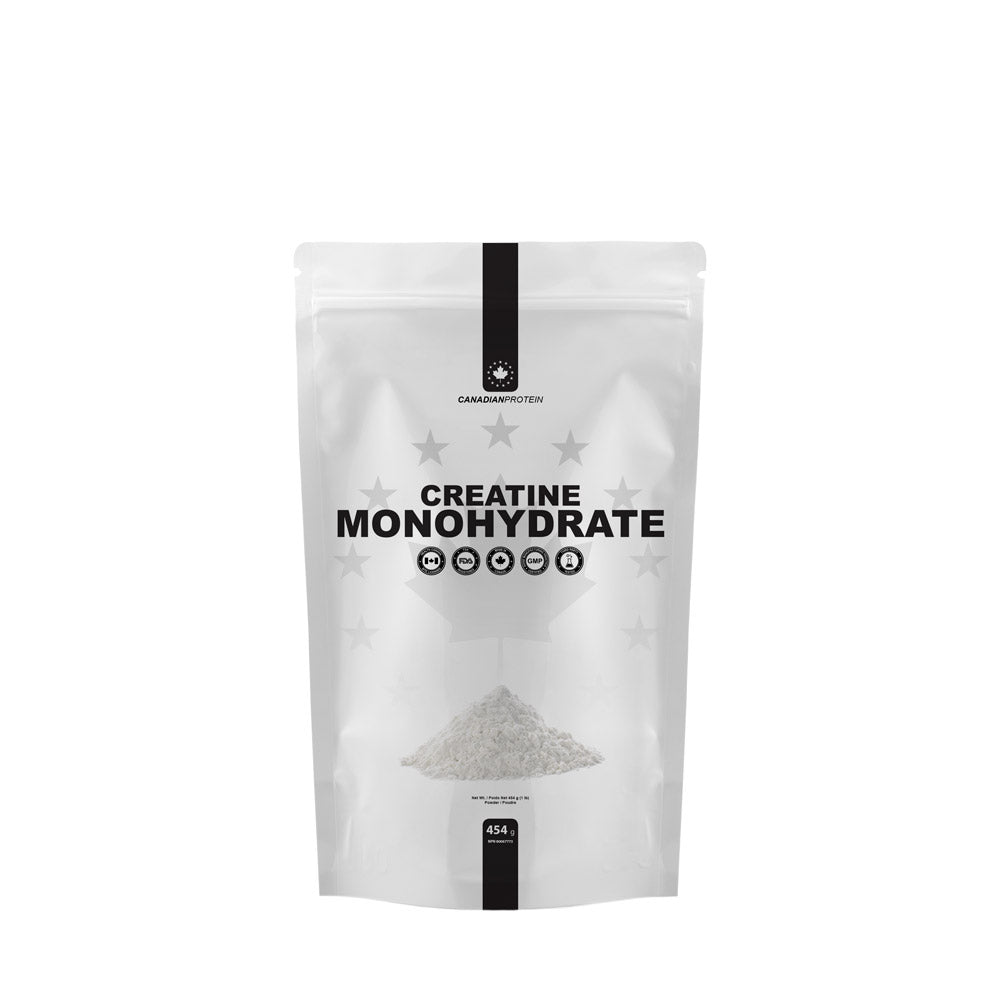
Canadian Protein carries creatine monohydrate in a few versions, so you can pick based on preference and how much you go through:
- (Creapure®) Creatine Monohydrate: made with Creapure®-branded creatine monohydrate, for lifters who want that specific raw material.
- Creatine Monohydrate: our standard creatine monohydrate for everyday use.
- Bulk Creatine Monohydrate: a larger format if you take creatine daily and want to restock less often.
Check each product page for the current sizes, serving size and label directions before you choose.
FAQ
Is it too late to start creatine at 45, 50 or 60?
No. The Texas A&M study specifically looked at adults aged 45 to 65 who weren't training before, and the creatine groups did better than placebo. Starting a lifting routine along with creatine is what gave the best strength results.
Do I need to load creatine?
No. Loading fills your muscle stores faster, but a steady daily dose gets you there in a few weeks. Both work. Follow your product's label.
Should I take 10 g a day like the study?
The study used 10 g a day (5 g twice daily). Common maintenance doses in creatine research are around 3 to 5 g a day. Follow the directions on your product's label rather than copying a study protocol.
Will creatine make me look bloated or gain weight?
Creatine draws water into your muscles, so the scale may go up a little when you start. That's water stored in your muscles, not fat. Over time, any extra lean mass you build from training will show up on the scale too.
Do I need creatine on rest days?
Yes. Creatine works by keeping your muscle stores full, so take it every day, including days you don't train.
Start your daily creatine habit
The takeaway from this fall's research is simple: train consistently, and let creatine help you get more out of each session. If you're ready to start, pick up (Creapure®) Creatine Monohydrate, take it every day, and get back under the bar.