Is Whey Protein Isolate Lactose-Free? What the Label Tells You
Our isolate has less sugar per scoop than our concentrate, but it's still made from milk. Here's what our labels actually say, and what to pick if dairy still bothers you.

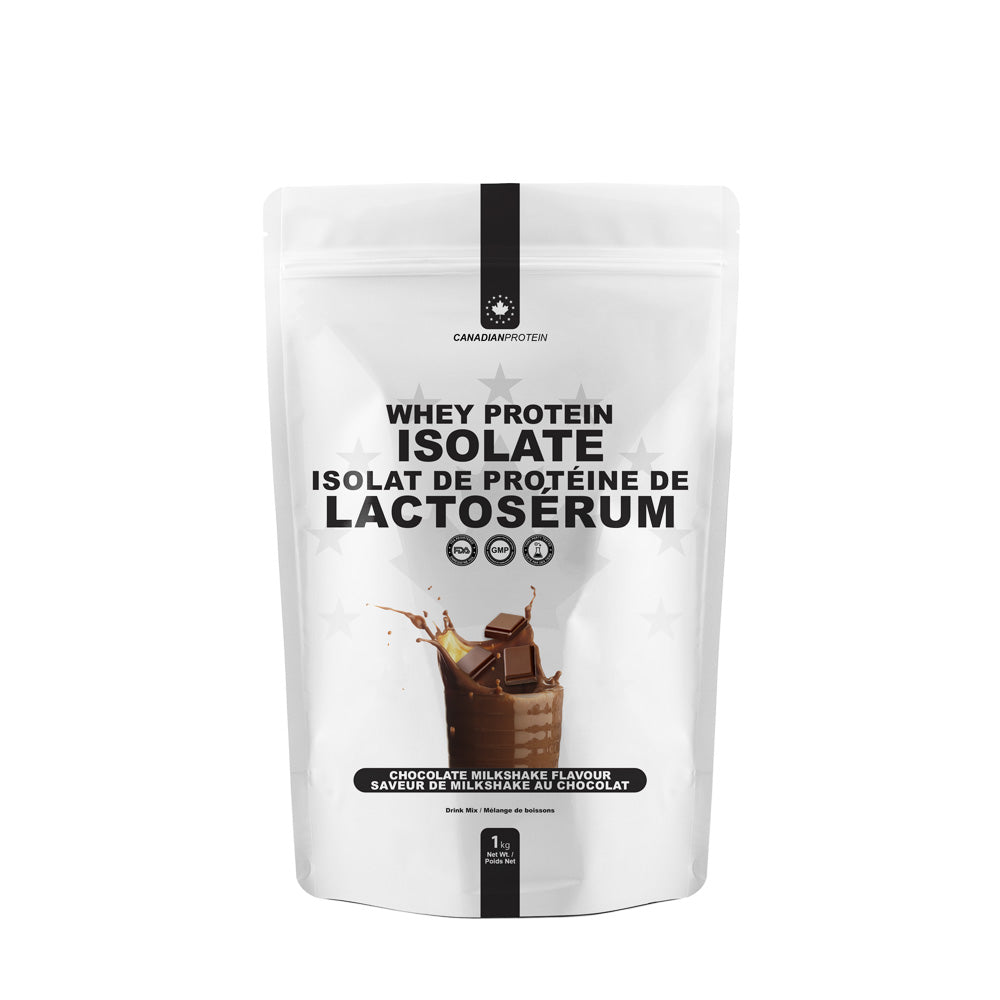
No, whey protein isolate isn't lactose-free. Our Whey Protein Isolate has more protein and less sugar per scoop than our concentrate, but it's still made from milk. It says "Contains: milk" on every flavour, and we don't label it lactose-free. The NIDDK says most people with lactose intolerance can have some lactose without symptoms, so isolate may sit fine with you. Below: how to read our labels, how isolate compares with concentrate, and three proteins with no milk in their ingredients if it doesn't.
Isolate has less sugar, but it isn't lactose-free
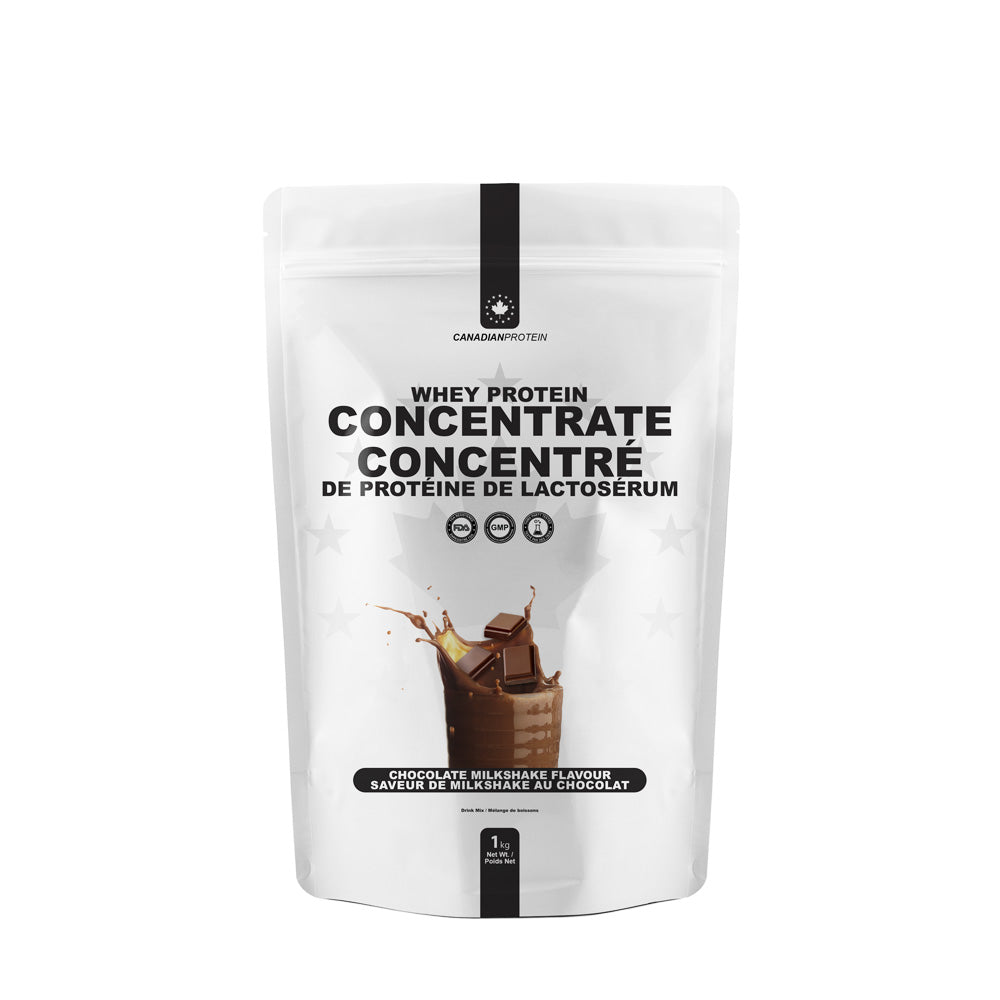
Isolate and concentrate are both whey, and whey is milk. Health Canada lists whey and whey protein concentrate among the other names for milk you'll see on food labels. Where our two differ shows up on the label: per 30 g scoop of the unflavoured versions, isolate has 27 g of protein and 1 g each of sugars and fat, while concentrate has 24 g of protein and 2 g each of sugars and fat.
"Less" isn't "none", though. Nothing in our product data calls our isolate lactose-free, and the label gives no lactose figure. So we won't tell you it has zero lactose. What we can show you is exactly what the label does say.
Isolate vs concentrate: where the lactose goes
The fairest comparison is the two unflavoured versions, because neither has added flavour, sweetener or creamer. Their ingredients are just the whey and sunflower lecithin (which helps the powder mix).
| Per 30 g scoop (Unflavoured & Unsweetened) | Whey Protein Isolate | Whey Protein Concentrate |
|---|---|---|
| Calories | 121 kcal | 127 kcal |
| Protein | 27 g | 24 g |
| Carbohydrates | 1 g | 2 g |
| Sugars | 1 g | 2 g |
| Fat | 1 g | 2 g |
| Ingredients | Whey protein isolate, sunflower lecithin | Whey protein concentrate, sunflower lecithin |
| Allergens | Contains: milk | Contains: milk |
| 1 kg bag | About 33 servings, $79.99 ($2.42 a serving) | About 33 servings, $69.99 ($2.12 a serving) |
Here's the careful bit. In a powder whose only ingredients are whey and lecithin, nothing sugary has been added, and the natural sugar in milk is lactose. So the sugars line is the closest clue the label gives you. It is a clue, not a measurement: the label doesn't list lactose separately.
On value, Whey Protein Concentrate costs 30 cents less a serving. If dairy doesn't bother you, that's what the cheaper option gives up: 3 g less protein and 1 g more sugars a scoop.
How to read our ingredient list and "Contains: milk" line
Milk is one of Canada's priority food allergens, according to Health Canada, which is why it's called out on our labels. Two parts of the label matter here.
- The "Contains" line lists the allergens in the product. Every whey we make says "Contains: milk", because whey is milk protein. Chocolate Peanut Butter isolate says "Contains: milk, peanuts".
- The ingredient list shows what was added. Our unflavoured isolate has two ingredients. Vanilla adds natural and artificial flavour, sucralose, xanthan gum and salt. Several flavours, such as Cookies and Cream and Birthday Cake, also list "creamer". If you want the shortest list, Unflavoured & Unsweetened is it.
Lactose intolerance is about digesting milk sugar. A milk allergy, as Food Allergy Canada explains, is a reaction to the protein in cow's milk, and whey is milk protein, so a lower lactose content doesn't make isolate suitable. If you have a milk allergy, or aren't sure which you have, skip whey and ask your doctor.
How much lactose sensitive people handle varies
According to the NIDDK, symptoms of lactose intolerance can include bloating, gas, diarrhea, nausea and stomach pain. It also says some people only need to limit lactose while others need to avoid it altogether, and that most people with lactose intolerance can have some lactose without symptoms.
Nobody can tell you your own limit from a blog post, and we don't know how isolate will sit with you. NIDDK suggests talking with a doctor or dietitian about adjusting what you eat. If they're happy for you to try whey, a gentle way to see how it goes:
- Start with half a scoop (about 15 g) of Unflavoured & Unsweetened isolate, mixed into a meal or smoothie rather than on an empty stomach. Our guide to measuring protein powder without a scoop helps with half servings.
- Keep the rest of the day's dairy steady so you know what caused what.
- Move to a full scoop only if the half scoop sits fine for a few days.
Proteins with no milk in their ingredients
Here are three proteins with no milk in their ingredients, all in Unflavoured & Unsweetened, per 30 g scoop.
| Per 30 g scoop | Egg White Protein Powder | Beef Protein Isolate | Vegan Protein |
|---|---|---|---|
| Protein | 25 g | 29 g | 24 g |
| Calories | 120 kcal | 115 kcal | 118 kcal |
| Carbohydrates | 1 g | 0 g | 1 g |
| Fat | 0 g | 0.5 g | 2 g |
| Sodium | 381 mg | 359 mg | 258 mg |
| Ingredients | Egg white protein | Beef protein isolate | Pea, brown rice and hemp protein |
| Allergens | Contains: eggs | None of the listed allergens | None of the listed allergens |
| 1 kg bag | $99.99 ($3.03 a serving) | $44.99 ($1.36 a serving) | $59.99 ($1.82 a serving) |
A few honest notes. Egg White Protein Powder costs the most per serving, and reviewers who bake with it like that it has no flavour to fight. Beef Protein Isolate is the cheapest and highest in protein here, but reviewers are split on its taste; it mixes best into something with flavour, like oatmeal or yogurt. Vegan Protein sits in the middle on price, and its flavoured versions are sweetened with stevia (Reb A) rather than sucralose.
Which one to pick: three quick scenarios
Try Unflavoured & Unsweetened Whey Protein Isolate: 1 g sugars a scoop and two ingredients. Start with half a scoop with food.
Stop the whey and switch to a protein with no milk in its ingredients. Vegan Protein is the middle-priced pick; Beef Protein Isolate is the cheapest per serving if you'll mix it into food.
Skip every whey, including isolate. Choose Vegan Protein, Beef Protein Isolate, or Egg White Protein Powder if eggs are fine for you, and check the "Contains" line on any flavour you buy.
Whey isolate and lactose: FAQ
Is whey isolate OK if I'm lactose intolerant?
It depends on you. The NIDDK says most people with lactose intolerance can have some lactose without symptoms, and our unflavoured isolate has fewer sugars than our unflavoured concentrate (1 g vs 2 g a scoop). Ask your doctor or dietitian, and if you try it, start with half a scoop with food.
Does whey isolate have lactose?
It's made from milk, so we don't call it lactose-free. Our labels don't give a separate lactose figure; in the unflavoured version, the 1 g of sugars is the closest clue.
Is your whey isolate lactose-free?
No. It isn't labelled lactose-free and says "Contains: milk". If you need to avoid milk, choose a protein whose ingredients contain no milk, such as Vegan Protein, Beef Protein Isolate or Egg White Protein Powder.
Is egg white protein dairy-free?
Our Egg White Protein Powder has one ingredient, egg white protein, and its allergen line says "Contains: eggs", with no milk listed. It's not a fit if you avoid eggs.
Can I take a lactase pill with whey?
The NIDDK says lactase products can help some people manage symptoms of lactose intolerance. Whether they suit you, and how to use them, is a question for your doctor or pharmacist.
Start low, read the "Contains" line
If dairy bothers you a little, Unflavoured & Unsweetened Whey Protein Isolate has 1 g of sugars a scoop and two ingredients, at $2.42 a serving in the 1 kg bag. If you'd rather avoid milk altogether, look at Vegan Protein, Beef Protein Isolate or Egg White Protein Powder.
Explore Whey Protein IsolateReferences & further reading
NIDDK, U.S. National Institutes of Health: Lactose Intolerance (symptoms, causes and management)
Food Allergy Canada: Milk (what causes a milk allergy and how to avoid milk)
Product figures come from the nutrition facts, ingredients and allergen lines of each product's Unflavoured & Unsweetened label, and from current 1 kg prices.
Disclaimer: This article is general information, not medical advice. If you have a milk allergy, digestive symptoms, or questions about lactase products, talk to your doctor, dietitian or pharmacist.